
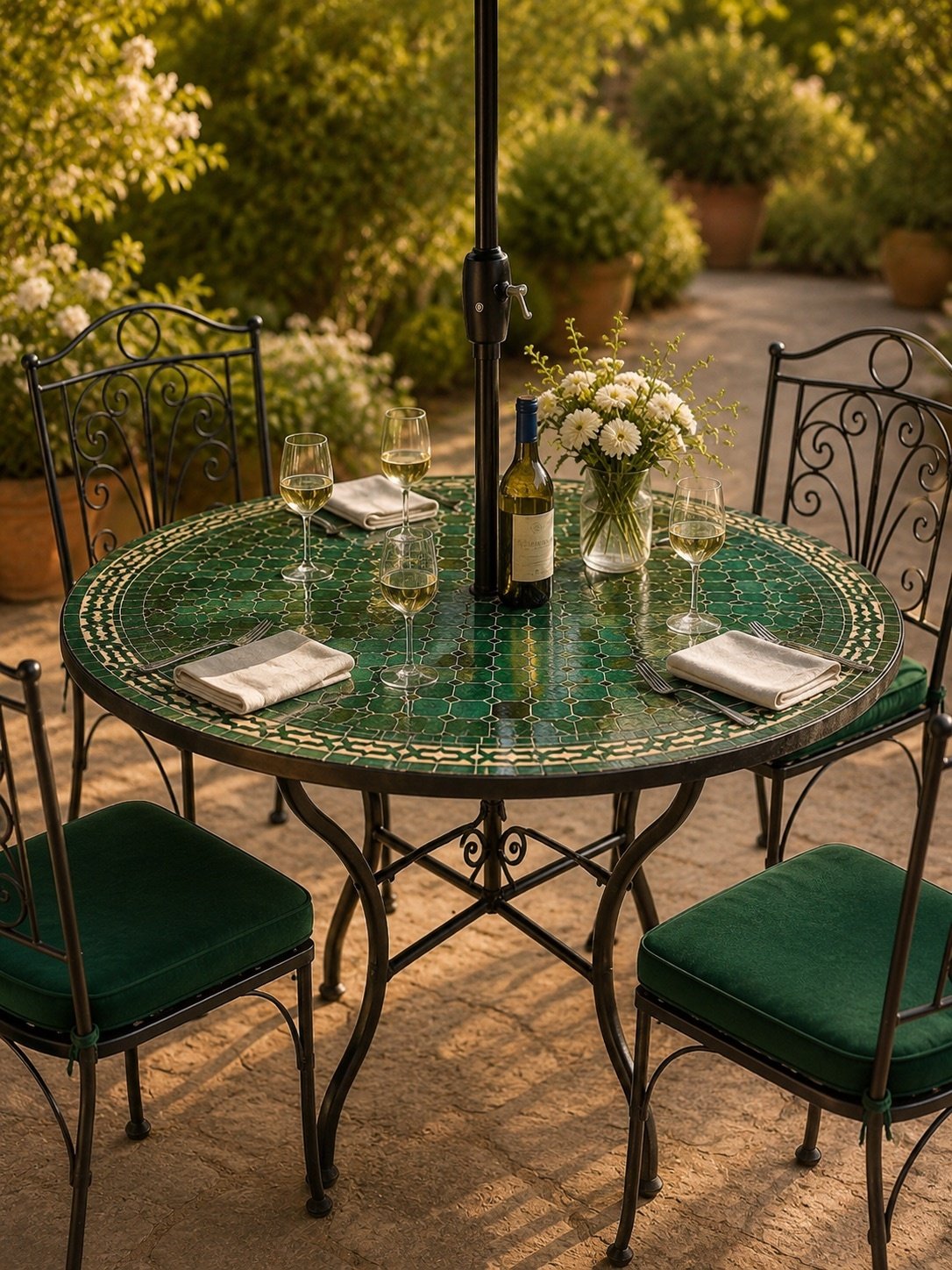
why handmade mosaic garden tables offer unique character
Mosaic Garden Tables: Why Handmade Is Better Than Factory Made
A garden table should do more than provide somewhere to place a drink. It should suit the available space, support the way you entertain and add personality to your outdoor setting. This is where handmade mosaic garden tables stand apart from mass-produced furniture.
A handmade Moroccan mosaic table combines practical outdoor furniture with decorative craftsmanship. Individual ceramic or zellige pieces are arranged into geometric patterns, creating a tabletop with colour, texture and small variations that reflect the work of the artisan.
Factory-made tables may offer a lower initial price and immediate availability. However, buyers looking for distinctive design, flexible sizing and a stronger connection to traditional craftsmanship often find greater value in a handmade table.
Find a Table Made for Your Outdoor Space
Explore our collection of handmade Moroccan mosaic tables, available in different shapes, patterns, colours and seating configurations.
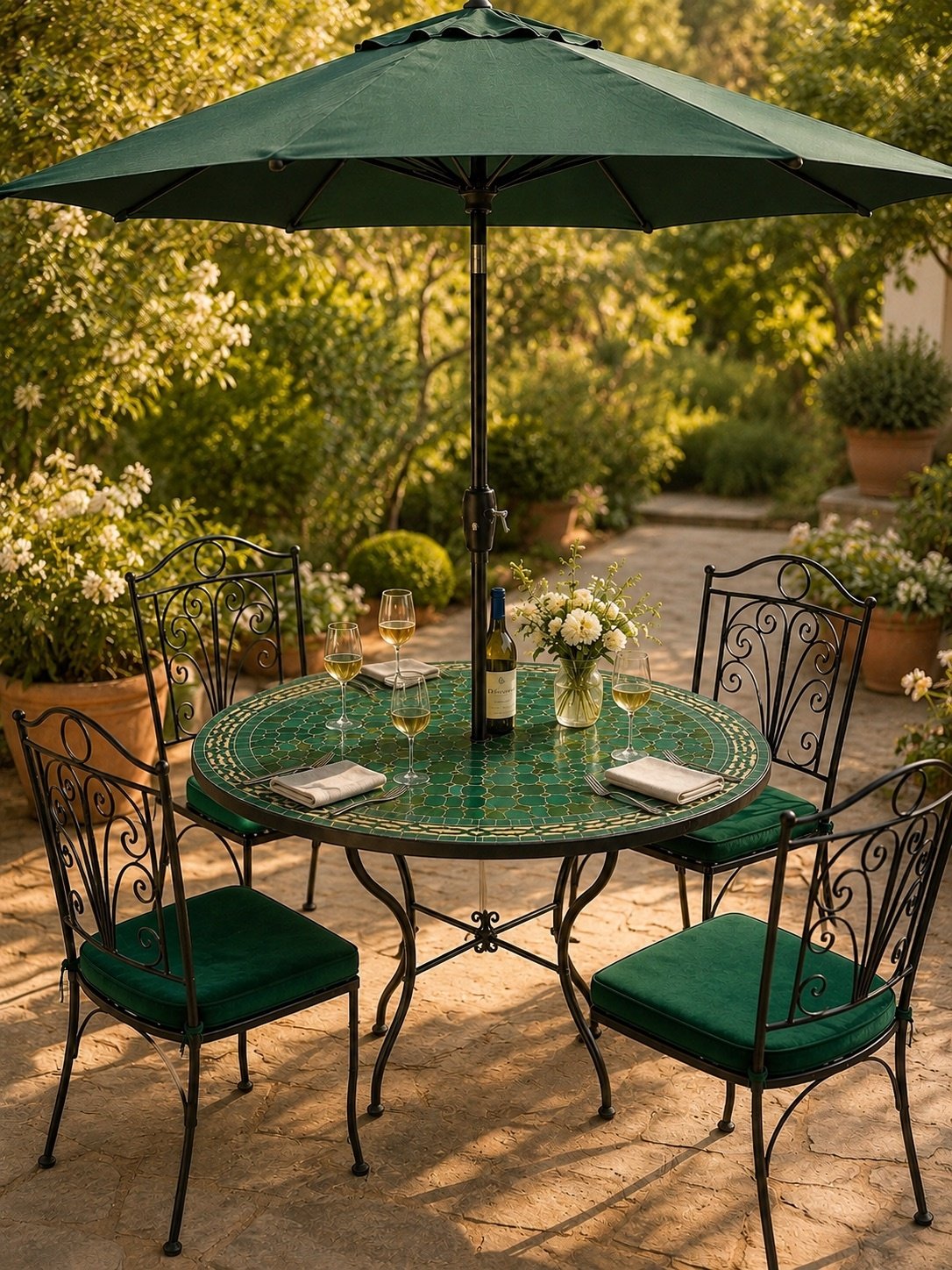
What Makes a Handmade Mosaic Garden Table Different?
The main difference is the way the tabletop is created. Instead of printing or mechanically repeating a surface pattern, an artisan places individual pieces to form the design. The final composition develops gradually through colour selection, cutting, arrangement and finishing.
This process can produce subtle variations in tone, spacing and texture. These are not necessarily faults. They are part of the character of a genuinely handmade piece and help distinguish it from a surface designed to look identical across thousands of units.
Moroccan mosaic craftsmanship is closely associated with cities such as Fez. The cultural importance of the city can be explored through UNESCO’s Medina of Fez overview. A contemporary mosaic garden table brings part of this decorative tradition into patios, terraces, balconies and conservatories around the world.
Why Handmade Can Offer Better Long-Term Value
A Design That Does Not Feel Mass Produced
Handmade mosaic tables are created as individual objects. Even when two tables share the same pattern, small material and placement variations give each one a distinct finish. This makes the table feel more personal and helps it work as a focal point rather than ordinary background furniture.
More Choice in Size and Shape
Factory furniture is normally limited to fixed dimensions. Handmade production can offer more flexibility. Depending on the design, buyers may request a round, square, rectangular or oval tabletop, along with a size that fits their garden more accurately.
Customisation is especially valuable for narrow terraces, small urban balconies, covered patios or large outdoor dining areas where standard dimensions may waste space or restrict movement.
Greater Control Over Colours and Patterns
A made-to-order table may allow you to select colours that coordinate with your chairs, cushions, exterior walls, tiles or garden planting. Blue and white can create a Mediterranean atmosphere, while terracotta, green, cream and black can produce a warmer or more traditional look.
Always ask what level of customisation is available. Some patterns can be recoloured easily, while highly detailed designs may need to retain certain contrasts so the geometry remains clear.
A Practical, Repairable Construction
A quality mosaic table is usually composed of a solid mosaic top and a separate metal base. This can make the table easier to transport, assemble and maintain. Individual surface areas may also be more practical to repair than a printed or moulded top that must be completely replaced after serious damage.
Construction quality still matters. Before ordering, confirm the tabletop materials, approximate weight, base finish, assembly method and care recommendations. Handmade does not remove the need to review technical details carefully.
How to Choose the Right Mosaic Table Size for Your Garden
Begin by deciding how the table will be used. A morning coffee table has different space requirements from a table intended for regular family meals or six-person entertaining.
- A 50–70 cm or 20–28 inch table works well for two people on a balcony or compact patio.
- An 80–100 cm or 31–39 inch table is a practical choice for up to four people.
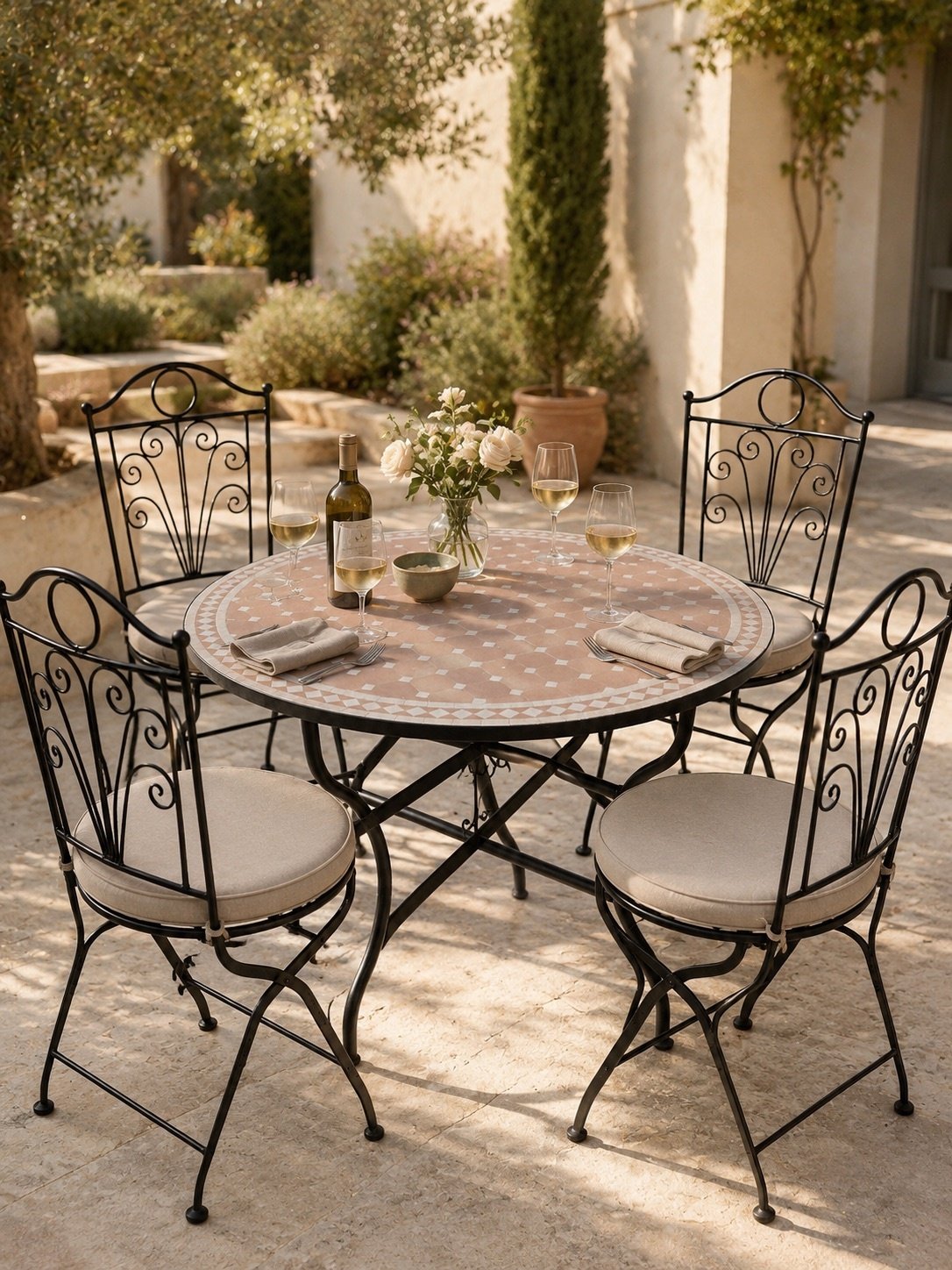
- A 110–130 cm or 43–51 inch round table can accommodate approximately four to six people, depending on the chairs.
- A 140–180 cm by 80–100 cm or 55–71 inch by 31–39 inch rectangular table suits larger dining areas.
These measurements are general planning guides rather than fixed seating guarantees. Chair width, table-base position and place settings all affect the final capacity.
Leave approximately 75–90 cm or 30–36 inches between the table edge and nearby walls, planters or railings. This gives guests enough room to pull out their chairs and move behind seated diners.
Choose the Correct Height
Standard dining tables are generally around 70–74 cm or 27.5–29 inches high. Coffee tables are lower, often around 40–50 cm or 16–20 inches. Confirm the height of your chairs before approving a custom order, particularly if you already own the seating.
Match the Shape to the Space
Round tables encourage conversation and fit naturally into many compact patios. Square tables work well in balanced spaces and against architectural lines. Rectangular tables are usually the most efficient choice for larger groups or long terraces.
Also consider the base. A central or carefully positioned base can provide more legroom, while wide support legs may reduce usable seating space. If you plan to use a parasol, ask whether the tabletop and base can include a compatible central opening.
How to Style a Mosaic Patio Table
Because a mosaic tabletop already contains pattern and colour, the surrounding furniture can remain simple. Black wrought iron chairs create a traditional garden look, while warm wood and neutral cushions soften the geometry of the mosaic.
For a coordinated setting, repeat one colour from the tabletop in chair cushions, outdoor planters or table linens. Avoid matching every element exactly. A few repeated colours will create a connected design without making the patio feel overly arranged.
In a small garden, allow the table to be the main decorative feature. In a larger setting, position it beneath a pergola, near greenery or within a defined dining area created with outdoor lighting and a weather-suitable rug.
Caring for a Handmade Mosaic Table
Routine care is usually straightforward, but instructions can vary according to the tiles, grout, sealant and metal base used by the maker.
- Remove dust with a soft cloth or brush.
- Clean the tabletop with mild soap, water and a non-abrasive cloth.
- Wipe spills promptly, especially strongly coloured or acidic liquids.
- Avoid harsh chemicals and abrasive cleaning tools.
- Dry the metal base after prolonged exposure to moisture.
- Use a suitable furniture cover during severe weather or long periods of non-use.
- Protect the table from repeated freeze-and-thaw conditions unless the maker confirms it is suitable for them.
If the table will remain close to a swimming pool, the sea or in a humid climate, ask about additional protection for the metal base. A galvanised or specially treated base may be recommended to improve resistance to corrosion.
Custom Orders and International Shipping
A custom table requires more planning than an item taken directly from warehouse stock. Before production begins, confirm the shape, exact dimensions, height, pattern, colours, base style and whether you require a parasol hole.
Ask for the production lead time separately from the estimated transit time. Handmade tables are often made to order, so the complete timeline may be longer than for factory-produced furniture.
International customers should also confirm the shipping method, packaging, tracking process, delivery access and whether local duties or taxes may apply. Provide an accurate telephone number for the carrier and check that the packaged tabletop can pass through gates, stairways and other restricted areas.
For a large or highly customised order, request a written summary of the agreed specifications. This gives both the customer and the maker a clear reference before the mosaic work begins.
Create a Mosaic Table That Fits Your Garden
Choose your preferred dimensions, shape, colours and pattern, or request advice based on your seating plan and available space. A well-planned handmade table can become the practical and visual centre of your outdoor area.
Frequently Asked Questions About Mosaic Garden Tables
Are handmade mosaic garden tables suitable for outdoor use?
Many are designed for patios and gardens, but suitability depends on the tabletop materials, grout, sealant and base finish. Check the maker’s weather and maintenance guidance before leaving a table outdoors permanently.
What size mosaic table is best for four people?
A round or square table measuring approximately 80–100 cm or 31–39 inches is often suitable for four people. Chair width and base placement should also be considered.
Can I customise the colours of a handmade mosaic table?
Many handmade designs can be customised. Available options may include the main colours, border details, tabletop shape and dimensions. Confirm all changes before production starts.
Do handmade variations mean the table is defective?
Minor differences in tile tone, texture and placement are normal characteristics of artisan production. Significant structural damage, loose pieces or unstable construction should be discussed with the seller.
How should I protect a mosaic table during winter?
Clean and dry the table, use a breathable protective cover and follow the maker’s storage advice. In freezing climates, covered or indoor seasonal storage may be recommended.