
Best Bar Sinks for Small Kitchens and Wet Bars
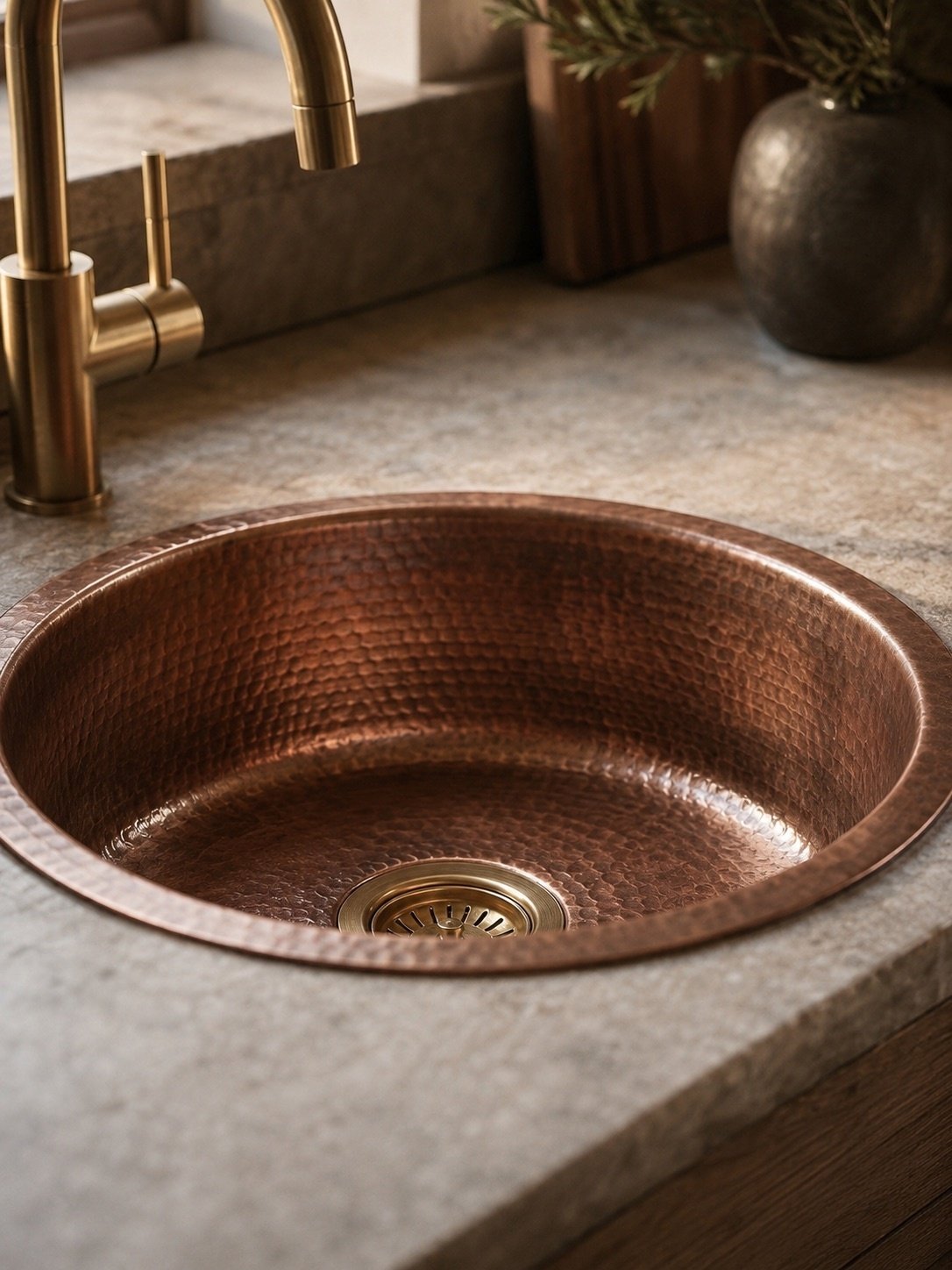
The best bar sinks for small kitchens provide convenient access to water without taking over the countertop. They can transform an unused corner, kitchen island, beverage station or entertaining area into a more practical workspace.
A compact sink can be used for rinsing glassware, washing fruit, preparing ingredients, filling a coffee machine or cleaning small utensils. Because it supports lighter tasks than a main kitchen sink, it does not need to be oversized. The right dimensions, material and installation style are more important than having the largest possible bowl.
Handmade brass and copper sinks are especially attractive when the sink will remain visible. Their warm colours, hammered surfaces and naturally changing finishes can turn a functional feature into a distinctive part of the interior.
Discover Artisan-Made Bar Sinks
Explore our collection of handmade brass bar sinks for small kitchens, preparation areas, kitchen islands and custom beverage stations.
What Is a Bar Sink?
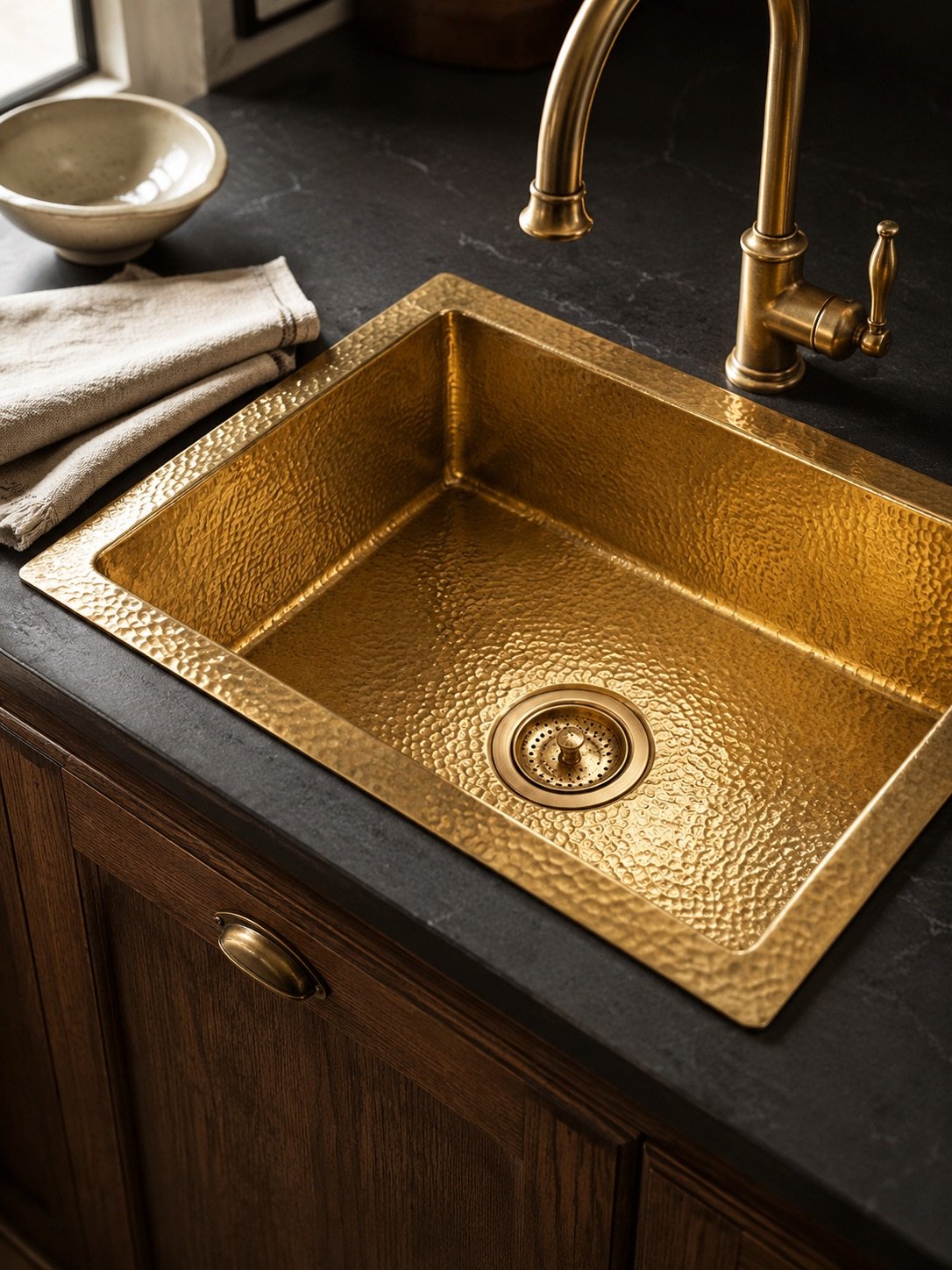
A bar sink is a smaller secondary sink installed away from the primary kitchen sink. It may also be described as a prep sink, secondary sink or wet bar sink, depending on its location and intended use.
Unlike a full-size kitchen sink designed to hold large cookware, a bar sink is intended for quick, everyday tasks. Its compact footprint makes it suitable for apartments, narrow kitchens, guest areas, kitchen islands and rooms where space must be used carefully.
A well-positioned secondary sink can also help separate activities. One person can use the main kitchen sink while another prepares fruit, rinses glassware or fills a water container at the smaller station.
How to Choose the Right Bar Sink Size
Start by measuring the cabinet and countertop rather than selecting a sink based only on its appearance. The external dimensions must fit the available surface, while the bowl, drain and plumbing need sufficient clearance inside the cabinet.
Compact round bar sinks are commonly available in diameters from approximately 8 to 16 inches, or 20 to 40 cm. A smaller size may be suitable for occasional rinsing, while a wider and deeper bowl provides more room for food preparation and glassware.
- 8–10 inches or 20–25 cm: suitable for very compact counters and light use.
- 12 inches or approximately 30 cm: a balanced option for many small kitchens and beverage stations.
- 14–16 inches or 35–40 cm: provides more working space while remaining smaller than a standard kitchen sink.
Do not rely only on the advertised diameter. Ask for the outer rim measurement, internal bowl diameter, total depth and rim width. A 12-inch outer diameter will not provide a full 12 inches of usable bowl space.
You should also check the minimum cabinet width recommended by the fabricator or installer. Plumbing, water lines and the drain assembly can reduce the usable space beneath the sink.
How Deep Should a Small Bar Sink Be?
A deeper bowl helps contain splashes and provides more room for rinsing. However, an excessively deep sink can reduce storage underneath and may feel uncomfortable if the countertop is already high.
Many compact handmade bowls have a depth of approximately 5–7 inches, or 13–18 cm. The best depth depends on the bowl diameter, countertop height and intended use. Confirm these details with your installer before ordering.
Best Materials for Small Bar Sinks
Solid Brass
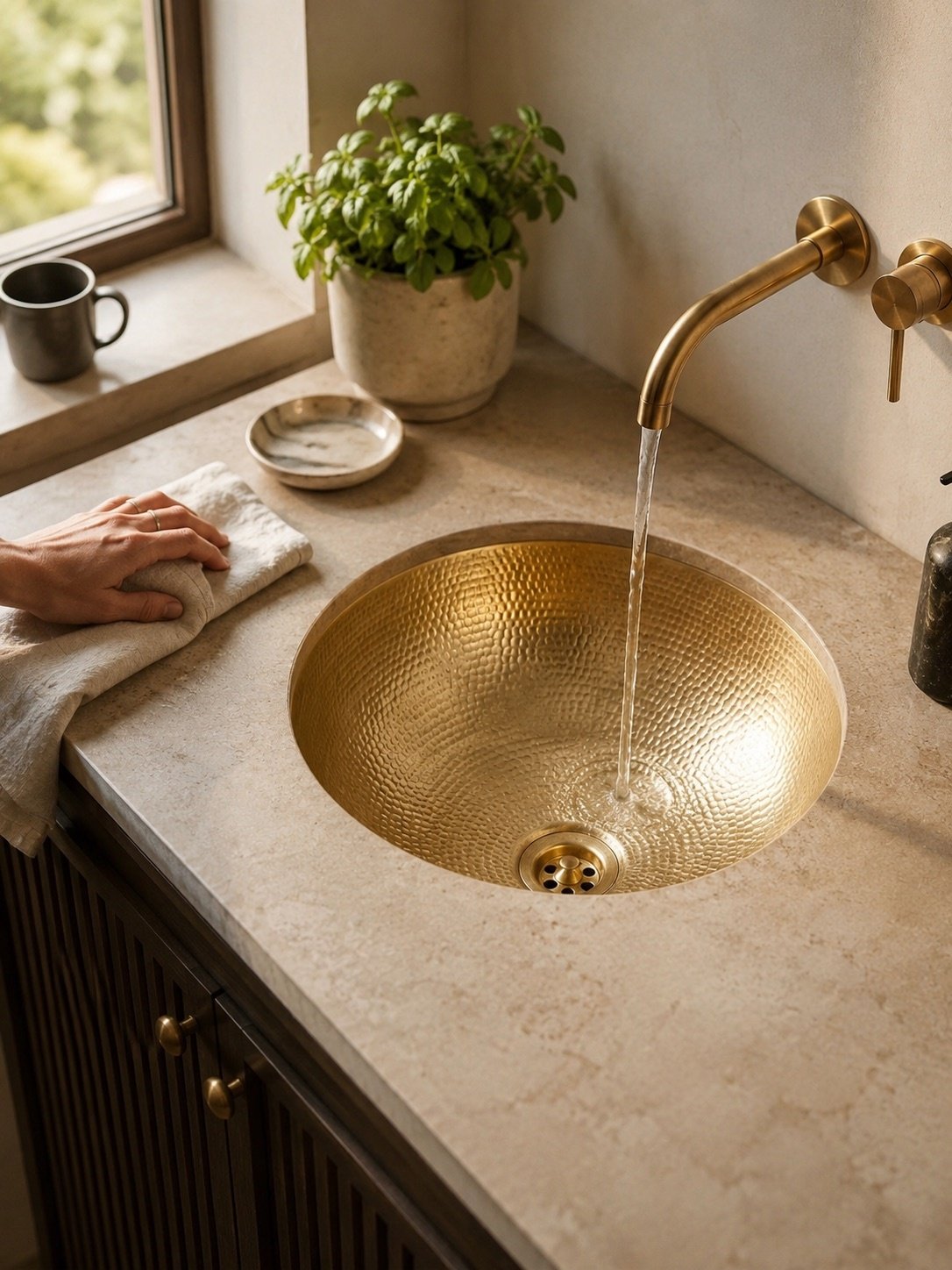
A solid brass bar sink offers a warm golden tone that works especially well with natural stone, marble, quartz, dark timber and traditional cabinetry. A hammered interior reflects light and makes the sink visually interesting without requiring decorative accessories around it.
Unlacquered brass develops a living patina. This means the colour gradually changes through exposure to air, water and regular handling. Buyers who prefer an evolving, aged finish often see this as part of the material’s appeal.
Copper
Copper is another popular choice for artisan sinks. It begins with a warm reddish-brown colour and can develop deeper variations over time. Hammering creates texture and helps each handmade bowl look individual.
As with unlacquered brass, buyers should expect the finish to change naturally. Ask whether the copper is sealed, waxed or intentionally left unlacquered because this will affect its appearance and care requirements.
Stainless Steel
Stainless steel has a contemporary appearance and is generally straightforward to coordinate with kitchen appliances. It can be a practical choice when low-maintenance function is more important than an artisan or decorative finish.
Ceramic and Fireclay
Ceramic and fireclay sinks provide a clean, bright look and are available in many colours. Their weight, edge protection and installation support should be considered carefully, particularly in small or custom cabinets.
Why Consider a Handmade Moroccan Bar Sink?
Handmade production allows the sink to become more than a standard plumbing fixture. Skilled artisans can create individual hammered surfaces, subtle texture and finish variations that are difficult to reproduce through uniform factory production.
Moroccan metalworking traditions are strongly associated with Fez, a city known for its historic craft culture. The wider cultural importance of the city is documented in UNESCO’s Medina of Fez overview.
A handmade sink may also offer more flexibility in diameter, depth, rim design, drain opening and finish. This is valuable when working with a narrow cabinet, an unusual countertop or a renovation where standard sizes do not fit correctly.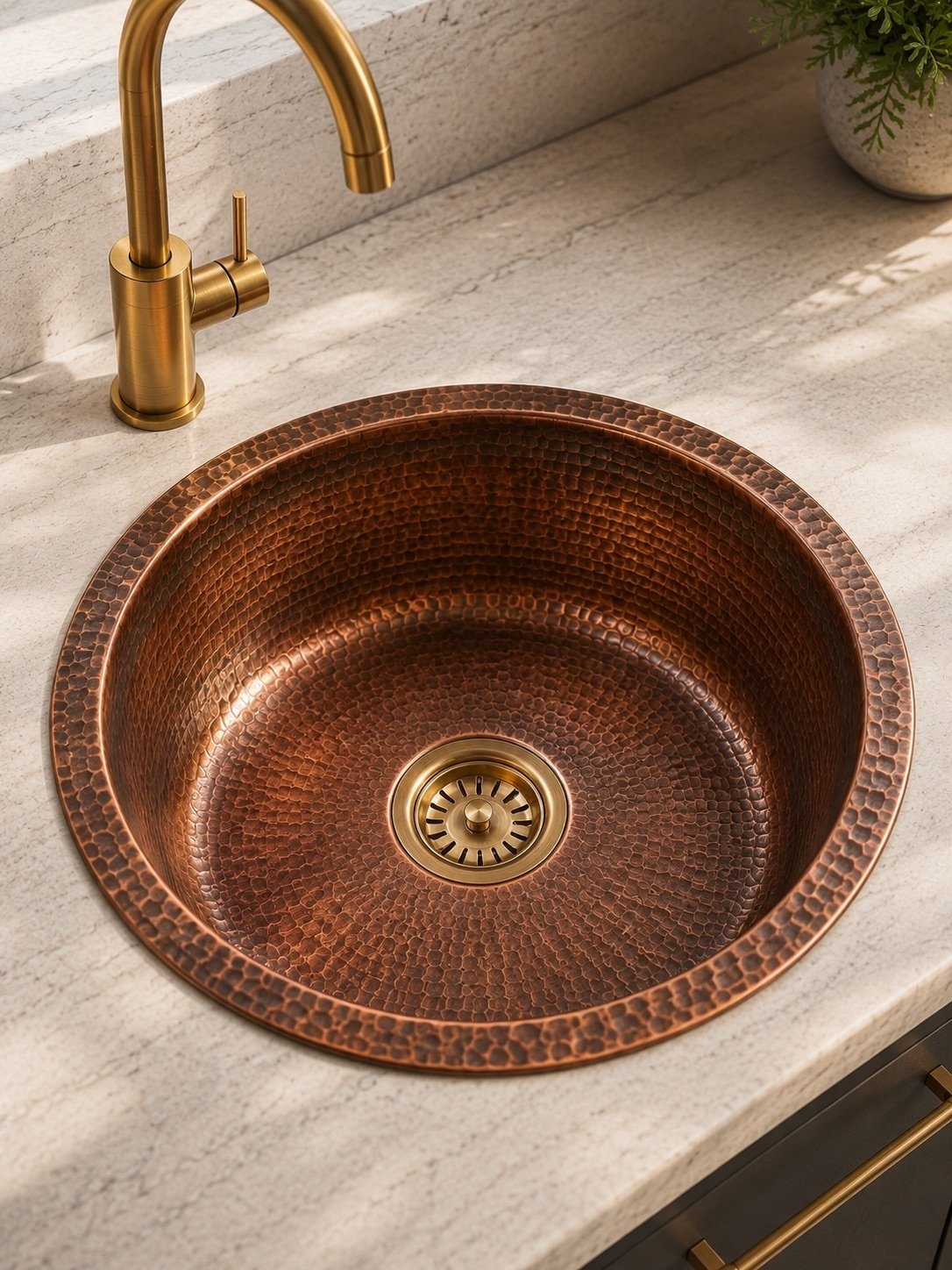
Drop-In or Undermount Bar Sink?
Drop-In Installation
A drop-in sink rests on the countertop with the rim visible above the surface. This installation can highlight a decorative brass or copper rim and may simplify the countertop cutout compared with some undermount installations.
The visible edge can become part of the design, particularly when the sink has a wide, hammered or carefully finished rim.
Undermount Installation
An undermount sink is installed beneath the countertop. It creates a clean transition between the counter and bowl and allows crumbs or water to be wiped directly into the sink.
Undermount installation requires suitable countertop material, reliable support and an accurate cutout. Natural stone, quartz and other solid surfaces are commonly considered, but final suitability should be confirmed by the countertop professional.
Check the Drain and Faucet Before Ordering
The sink, drain, countertop and faucet must work together. Ask for the drain opening diameter and confirm whether a compatible strainer or drain assembly is included.
Compact bar sinks may use different drain sizes depending on their design and intended purpose. Never assume that a standard kitchen drain will fit every handmade bowl.
Faucet reach is equally important. The water stream should fall comfortably into the bowl rather than landing on the rim or too close to the front. A faucet that is too tall may create splashing in a shallow sink, while a short spout may not provide enough working space.
Send the sink specifications to your countertop fabricator and plumber before the opening is cut. A physical template or confirmed technical drawing is preferable when the sink is handmade.
Styling a Brass or Copper Bar Sink
A brass sink can be paired with a matching unlacquered brass faucet for a coordinated appearance. It can also be combined with aged bronze, matte black or dark metal fixtures to create contrast.
Light marble and cream quartz make warm metals appear brighter. Soapstone, dark granite and rich wood create a deeper, more traditional atmosphere. For a quieter design, allow the sink to be the main decorative element and keep the surrounding countertop simple.
If the sink has a heavily hammered surface, consider a faucet with cleaner lines. If the bowl is smooth and minimal, a bridge-style or wall-mounted faucet can add more visual detail.
How to Care for a Handmade Metal Bar Sink
Regular gentle care will help preserve the surface without removing the natural character of the metal.
- Clean the bowl with mild soap, warm water and a soft cloth.
- Rinse away food residue and cleaning products promptly.
- Dry the sink when convenient to reduce water spotting.
- Avoid abrasive pads that may scratch or alter the finish.
- Avoid bleach, strong acids and aggressive household chemicals.
- Follow the maker’s instructions before applying metal polish or wax.
If the sink is unlacquered, variation and patina should be expected. Metal cleaner can alter this finish, so it should only be used when a brighter appearance is desired and the maker confirms that it is appropriate.
Custom Orders and International Shipping Advice
For a custom bar sink, provide the desired outer dimensions, internal bowl size, depth, installation style, finish and drain opening. Mention the countertop material and available cabinet width as well.
Ask for the production period and estimated transit time separately. Handmade products may require time for forming, hammering, finishing, inspection and protective packaging before dispatch.
International customers in the USA, Canada, UK, Australia and Europe should confirm the shipping method, tracking process and whether local taxes or import charges apply. Provide a valid telephone number for the carrier and inspect the package shortly after delivery.
Do not cut the countertop before checking the final sink dimensions. Minor variations can occur in handmade production, so the delivered sink or its confirmed template should guide the final cutout.
Request a Bar Sink Made for Your Space
Choose your preferred diameter, depth, metal finish and installation style. For unusual cabinets or countertop layouts, request a custom-size recommendation before placing your order.
Frequently Asked Questions About Bar Sinks
What is the best bar sink size for a small kitchen?
A sink around 10–14 inches, or 25–35 cm, can suit many compact kitchens. The correct size depends on the countertop, cabinet width, plumbing clearance and intended use.
Is a brass sink suitable for a preparation area?
A properly made brass sink can be used for rinsing, beverage preparation and other light kitchen tasks. Follow the maker’s cleaning and maintenance instructions for its specific finish.
Does unlacquered brass change colour?
Yes. Unlacquered brass naturally develops a patina through exposure to air, water and handling. The resulting colour variations are part of its living finish.
Should I choose a drop-in or undermount bar sink?
Choose drop-in installation when you want a visible decorative rim. Choose undermount installation for a cleaner countertop transition, provided the counter material and support are suitable.
Can a handmade bar sink be ordered in a custom size?
Many artisan-made sinks can be customised. Confirm the outer diameter, internal bowl size, depth, rim width, drain opening and installation style before production begins.
Leave a comment